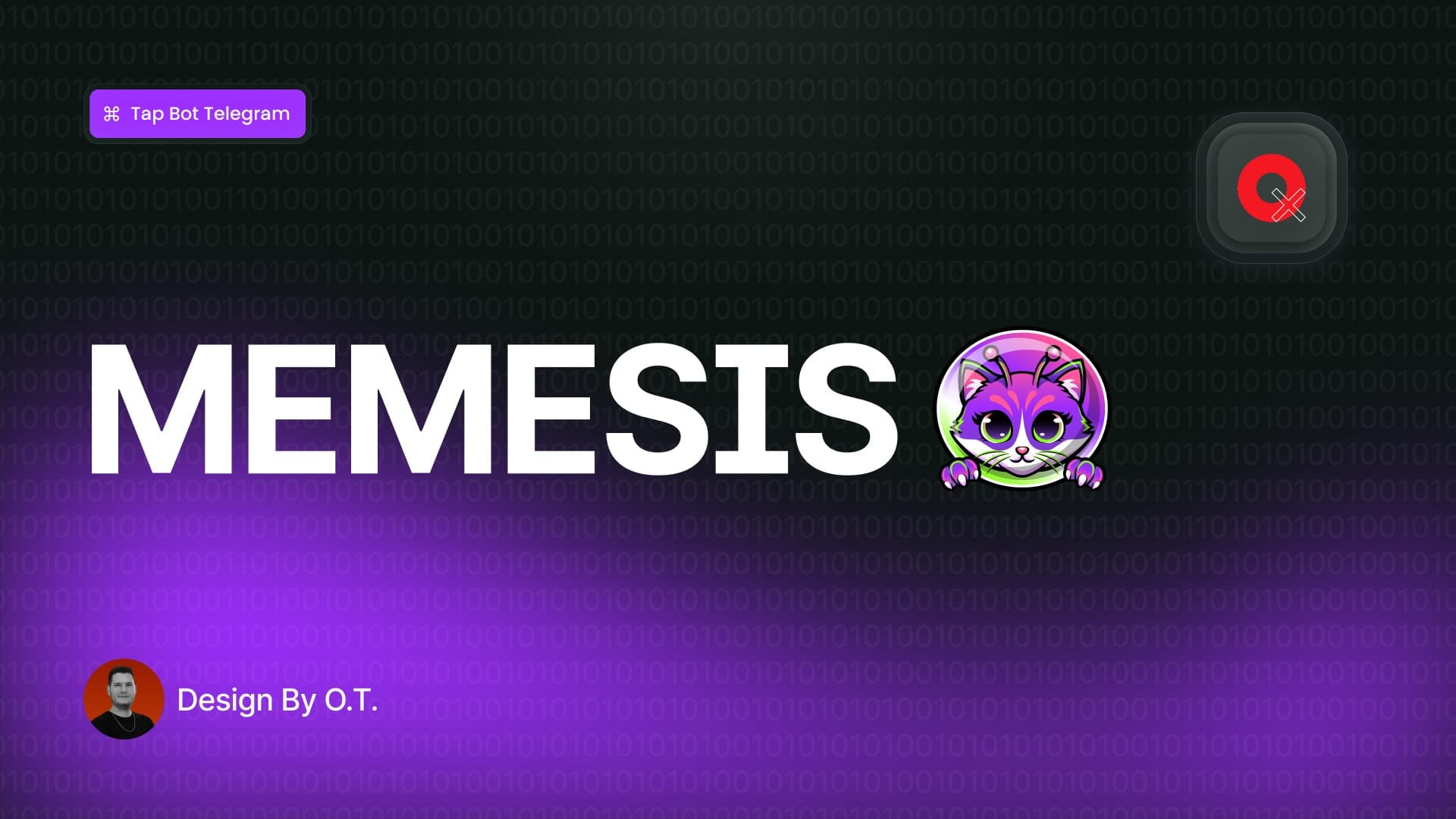
Telegram Mini-App · Web3 · gamified loyalty · AI product UX
A Telegram loyalty ecosystem, guided by an in-product AI coach
A play-to-earn and loyalty ecosystem inside Telegram — tasks, referrals, leaderboards and partner tools — with an AI coach at its heart: a conversational guidance layer that answers 'what should I do next?' and makes the reward economy self-explanatory.
Backdrop — the actual working file
- Role
- Co-Founder · Product Design · Product Management
- Client
- Own venture (DecentraHubs)
- Period
- Venture project
- Platforms
- Telegram Mini App
- Tools
- Figma · Telegram WebApp APIs
- Status
- Selected product work
Overview
Memesis World lives where Web3 communities actually are: inside Telegram. The product turns community behavior — completing tasks, inviting friends, competing, learning — into a structured loyalty economy with five modules: Tasks, Referral, Leaderboard, AI Coach and Loyalty.
The design problem is focus: mini-apps get seconds of attention between chats. Every loop had to be legible instantly and rewarding quickly, without collapsing into slot-machine noise.
CONCEPT-STAGE WORK — presented as product definition and structure, not shipped scale. No invented metrics.
Scope
- AI coach — conversational guidance UX
- Engagement loop design
- Task & reward economy
- Referral mechanics
- Mini-app UX within Telegram constraints
- Partner-facing tools
The challenge
Engagement products earn their keep by retention, not novelty. The task economy needed enough variety to sustain dailies, referral mechanics strong enough to grow the graph, and a leaderboard that motivates the middle of the pack — not just the top ten.
Telegram's mini-app constraints — viewport, navigation, session length — shaped every screen: single-column layouts, immediate state, no onboarding essays.
My role
Co-founder ownership across product and design: the engagement model, the reward economy structure, module UX and the partner-facing layer that lets communities plug in their own tasks and rewards.
Product decisions
3 that shaped the productAnchor the product on a task economy rather than pure tap-to-earn.
WhyTap games spike and die; tasks connect engagement to actions that have value for partners and the community.
ImpactA structured task system — social actions, learning steps, partner campaigns — with rewards flowing into one loyalty balance.
Design referrals as a progression system, not a link dump.
WhyThe referral graph is the growth engine; it needs visible progress and milestone rewards to sustain sharing.
ImpactTiered referral rewards with transparent tracking — who joined, what they earned you, what the next milestone unlocks.
Add an AI coach as the retention layer.
WhyMost users don't read docs; an in-product guide that answers 'what should I do next?' converts confusion into action.
ImpactA conversational surface that recommends tasks, explains mechanics, and turns the loyalty economy self-explanatory.
Engagement architecture
Loops that respect the user
Daily task refresh gives a reason to return; referrals compound the graph; the leaderboard creates ambient competition with league-style brackets so mid-table users still see progress; loyalty balances make all of it legible in one number.
Partner tools close the business loop: communities and projects bring their own tasks and rewards, making the platform a distribution channel rather than a closed game.
// Interface work for this venture is shown selectively; the public case focuses on the product and economy design.
AI product UX
An AI coach that turns confusion into the next action
Most users never read docs. The AI coach is a conversational surface inside the loyalty flow: it recommends the next task, explains mechanics in plain language, and makes the reward economy self-explanatory — guidance where the user already is, not a help center they have to leave for.
It is the retention layer. A mini-app gets seconds of attention, so the fastest path from 'I'm lost' to 'I did something' is a coach that already knows the user's state.
// Conversational-guidance UX — the AI-product-design practice I carry across my work.
Outcome
verified, qualitative where honest- 01
A complete engagement architecture — five modules with defined loops, reward flows and partner integration points.
- 02
An in-product AI coach — conversational guidance UX that doubles as the retention layer.
- 03
Founder-level proof of taking a Web3-native product from idea to structured, buildable definition.
// Presented as venture product work — mechanics and structure over vanity metrics.
More projects
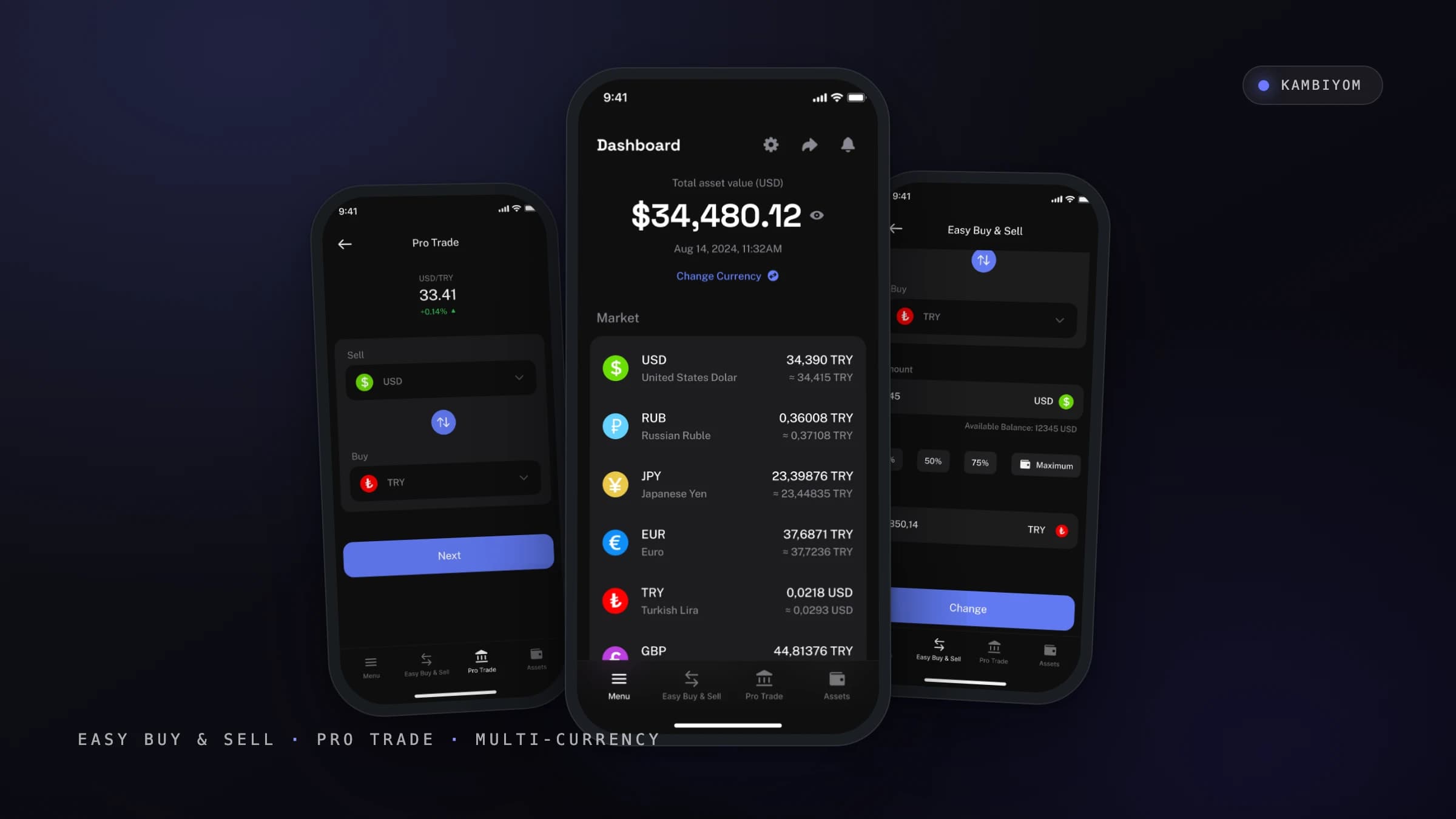
Kambiyom
Structuring a fragmented currency market into a marketplace
Read case →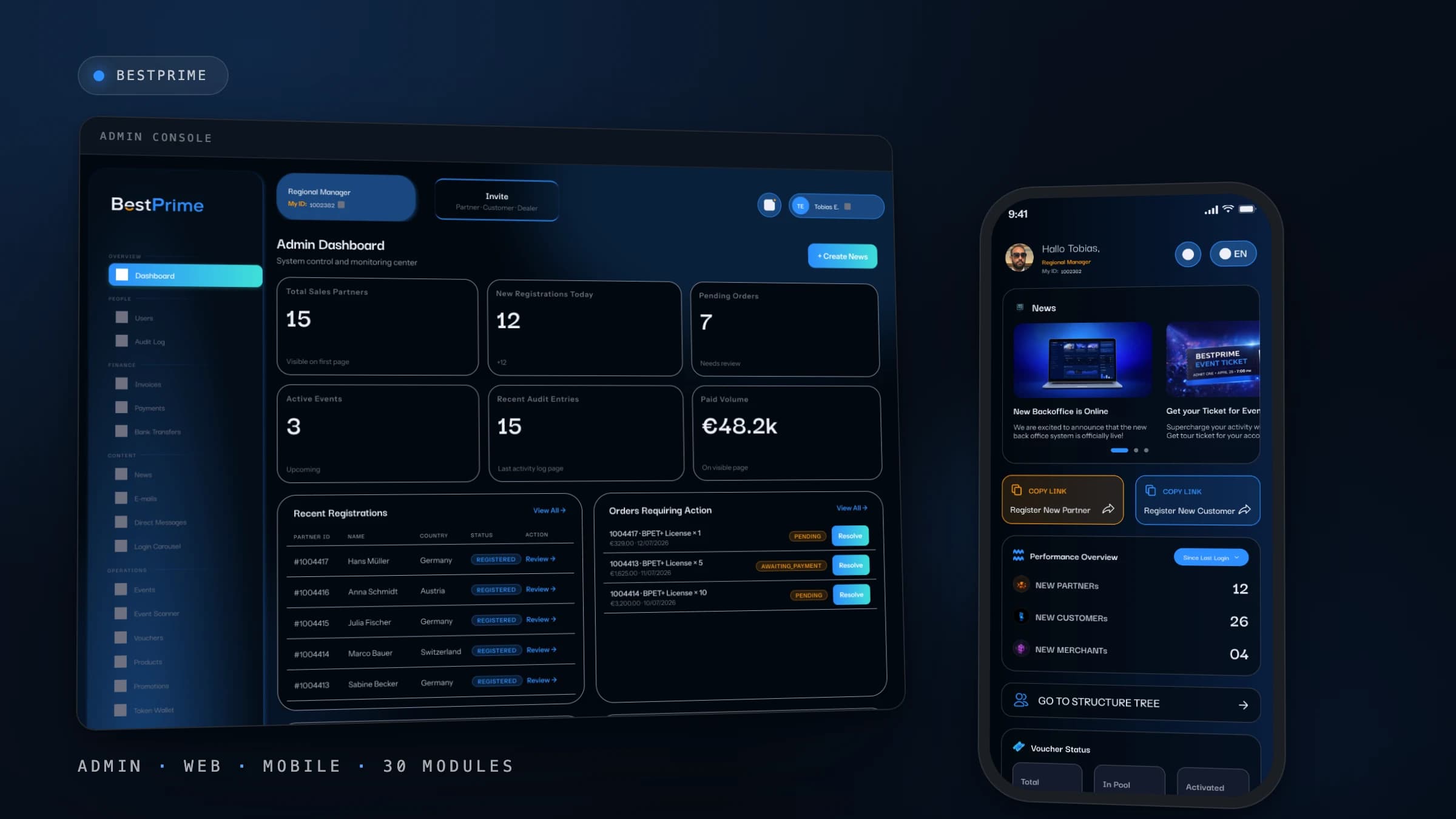
BestPrime
A premium partner platform, from its admin console to the app stores
Read case →DecentraHubs
Running a product studio — from brand systems to shipped software
Read case →